
Written By: Atiq Ur Rehman
Is your home still running on an old rewirable fuse box? Upgrading to a modern consumer unit is the single most important safety upgrade you can make for your property. It protects your family from electric shocks and your home from electrical fires.
At Electricians London, we understand that navigating costs and regulations in the capital can be confusing. Prices here differ from the rest of the UK due to accessibility, property age, and higher labour standards.
This guide breaks down consumer unit replacement costs clearly. It helps you budget without hidden surprises.
Average Cost: £575 – £850 (Fully installed, certified).
Typical Duration: 4 – 8 hours (Often a full day in Central London properties).
Get 3 Vetted Quotes: Use our network to compare local electrician prices.
Use the sliding scale below to get a baseline for your project.
| Job Description | Typical Circuits | Estimated Cost Range (Materials + Labour) |
|---|---|---|
| Small Flat / Apartment | 4 – 6 Circuits | £450 – £600 |
| Average 3-Bed House | 8 – 10 Circuits | £575 – £750 |
| Large 4+ Bed House | 12 – 16+ Circuits | £750 – £1,100 |
| Garage / Shed Supply | 2 – 4 Circuits | £350 – £500 |
| Additional Shower Unit | 1 – 2 Circuits | £300 – £450 |
Note: These prices include standard testing and certification. They assume the existing household wiring is in satisfactory condition to connect to the new board.
The price of the hardware varies significantly based on the level of protection. In 2026, the industry standard is moving toward full circuit protection.
High Integrity (Full RCBO Board): £650 – £950
Best for: Large family homes.
Why: Each circuit has its own individual overload and residual current protection. If your kettle trips, you don’t lose your lights. This is the gold standard and adds the most value to a property.
Dual RCD Split Load Board: £500 – £700
Best for: Flats and smaller houses.
Why: Circuits are split across two RCDs. If one side trips, half the house stays on. A cost-effective solution, though a fault on a socket could plunge half your home into darkness.
Garage/Metalclad Unit (IP65 Rated): £350 – £500
Best for: Outbuildings, workshops, or damp environments.
Why: Durable, water-resistant casing.
Shwer Unit (High Ingress Protection): £320 – £480
Best for: Dedicated supply for powerful electric showers.
While the national average for an electrician is £200-£300 per day, London rates reflect the higher cost of doing business in the city.
Standard Day Rate (NICEIC Registered): £350 – £550 (Inclusive of insurance and Part P certification).
Fixed-Price Job: Most reputable electricians will quote a fixed price for a fuse replacement. This protects you from unexpected time overruns.
Emergency/Call-Out (Evenings/Weekends): £120 – £200 call-out fee, plus £65 – £85 per hour.
London properties are unique. Here is what might increase the price from a standard quote:
Relocating the Unit: Moving the box more than 1-2 meters often requires extending the meter tails and main earth.
Minor Move (1-2m): +£150 – £250
Major Move (Requiring new cabling): +£400 – £800 (This may involve coordination with the Distribution Network Operator if the meter needs moving).
Pre-1960s Wiring (Rubber/PVC): If your cables are cloth-covered or very old lead-sheathed, they cannot legally be connected to a shiny new consumer unit.
Partial Rewire Required: +£500 – £1,500 depending on how many circuits are affected.
Re-Wireable Fuse Box Removal: Safely isolating and removing old iron fuse boxes (especially in period properties) takes extra care.
Disposal & Make Good: Usually +£50 – £100 if the plasterwork behind is damaged.
Flats (Limited Accessibility): If parking is impossible and the job requires long cable runs through communal areas, expect a slight premium for logistics.
Before swapping a board, a good electrician will recommend an EICR. Think of it as an MOT for your home’s electrics.
Standalone EICR Cost (London): £150 – £400 (depending on the number of bedrooms).
Combined Deal (EICR + New Board): Many companies (including those in our network) offer a discount if done together.
Package Price: £650 – £1,100 (Including the report and the new board installation).
If the EICR reveals issues like a lack of earth bonding on your gas or water pipes, this must be fixed before the new board goes in.
Earth Bonding Upgrade: £150 – £300
Understanding the process helps you see where the costs go.
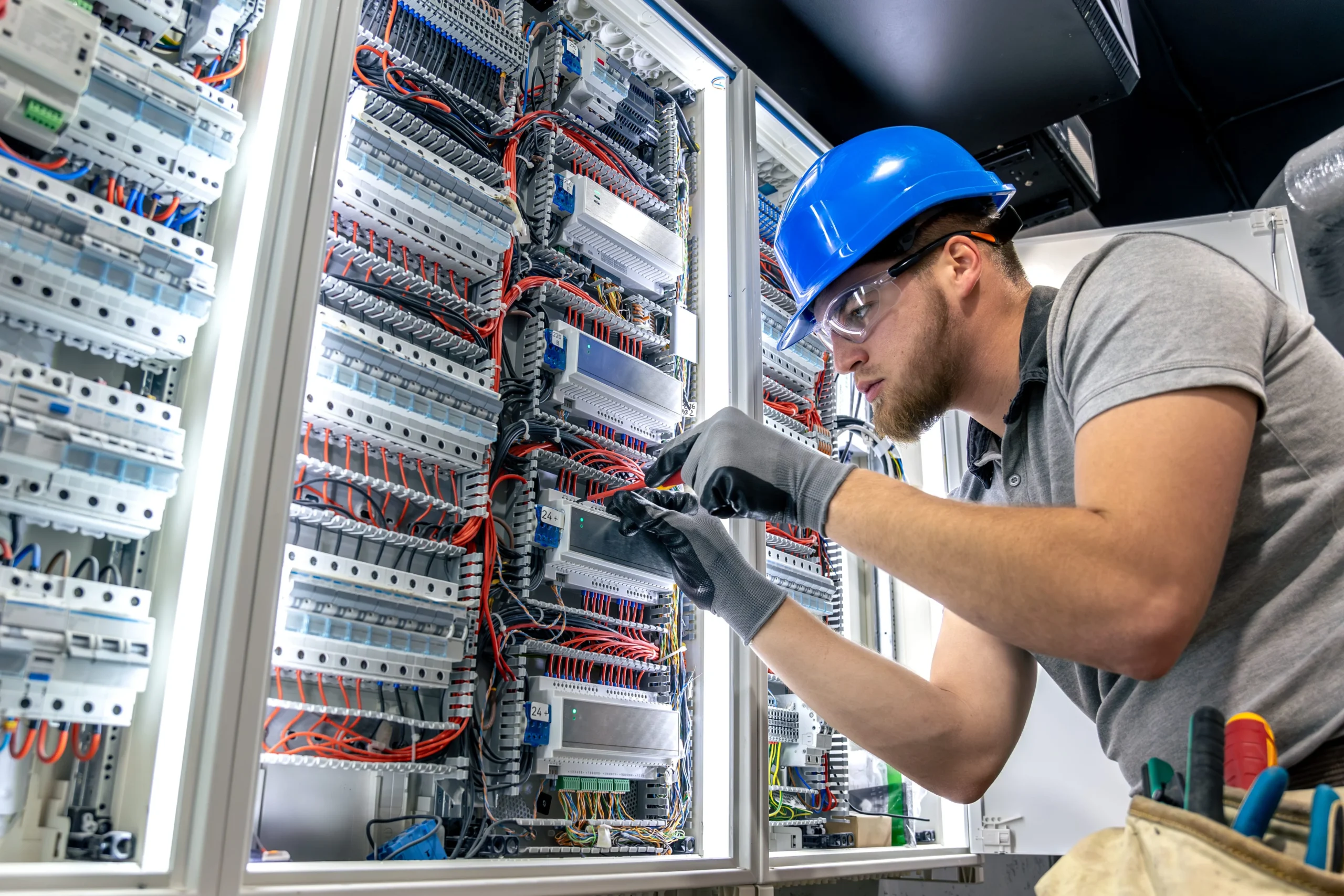
Isolation & Preparation: Power is switched off. The electrician safely removes the old fuse box cover (but leaves the meter tails live, handled carefully).
Circuit Integrity Check: Before connecting, they test each circuit (ring main, lighting, etc.) for faults. If a fault is found, work stops until it’s located.
Board Installation: The new enclosure is mounted. The main switch, RCDs, and MCBs are installed on DIN rails.
Re-wiring: The existing circuit cables are meticulously labelled and connected to the new breakers.
Testing (The Long Part): This is where the cost is justified. The electrician performs a series of rigorous tests:
Earth Loop Impedance
Insulation Resistance
RCD Trip Times (must trip within 40ms for sockets)
Polishing & Labelling: A compliant board must have a clear circuit chart inside the door.
Certification: You get an Electrical Installation Certificate (EIC). The scheme provider, NICEIC or NAPIT, then informs your local London Building Control about the compliant work (Part P).
Since the 18th Edition Wiring Regulations (BS 7671) were updated, there is a big push for Surge Protection Devices (SPD) .
What is it? Protects sensitive electronics (TVs, computers, smart appliances) from voltage spikes caused by lightning or grid switching.
Is it mandatory? For most domestic homes, a risk assessment is done. However, for high-value homes or home offices, it is highly recommended.
Cost to add SPD: +£100 – £200 on top of the board price.
Don’t just pick the cheapest quote. Use this checklist to ensure safety and compliance:
Check the Scheme: Are they registered with a Competent Person Scheme? Look for logos like NICEIC, NAPIT, or ELECSA.
Ask about “Notification”: They must inform the local authority (e.g., Camden Council, Southwark Council) that the work is done. You shouldn’t have to pay separate building control fees if they are registered.
Warranty: Do they offer a guarantee on their workmanship (e.g., 5 or 10 years)?
Insurance: Ensure they have £2m+ Public Liability Insurance.
A: Not inherently dangerous, but it is unprotected. Old fuse boxes cannot detect earth leakage (faults that cause electric shocks). They only blow when there is a massive overload (short circuit). A modern RCD protects you from fatal shocks.
A: Typically 20-25 years. However, regulations change. While the physical box may last, internal components (like RCDs) should be tested periodically to ensure they still function.
A: Yes. While you can upgrade for safety (which is encouraged), the visual impact may be considered. You must discuss the location and type of enclosure with your local Conservation Officer before work begins.
A: While the physical swap can be quick (2-3 hours), the mandatory testing is what takes time. A rushed job usually means corners are cut on testing. We advise planning for a full day without power.
A: A registered electrician carries £10M+ indemnity insurance, provides a Building Regulations Compliance Certificate, and uses calibrated testing equipment. Without the certificate, when you sell your house, your solicitor will ask for it, potentially causing the sale to fall through.
Ready to upgrade the safety of your home? Fill in the form below to get matched with fully vetted, local electricians.
Need a new fuse box? ⚡ See the average cost of replacing a consumer unit in 2026. Compare prices by house type & find certified electricians.
Copyright 2022 © All Right Reserved Design by Rometheme